
Utah’s Housing Market Highlights
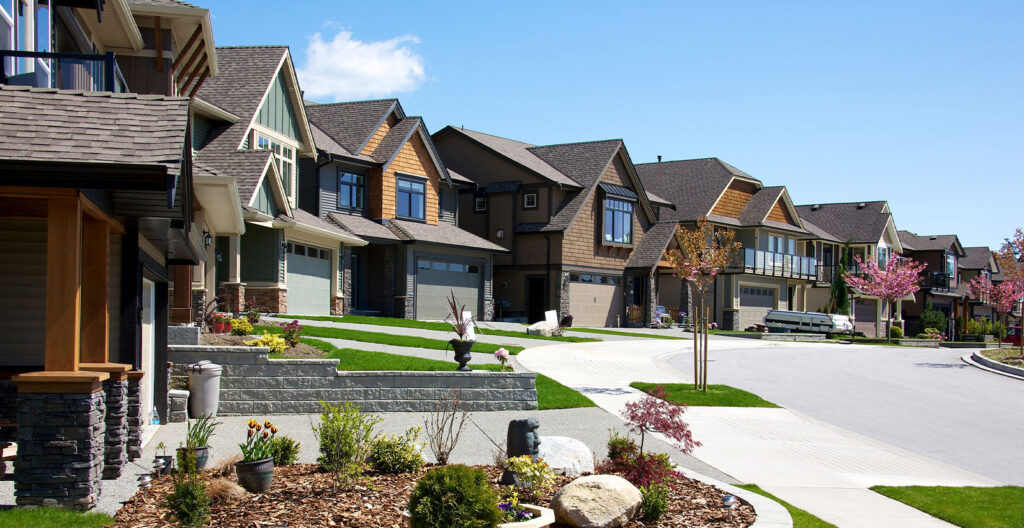
The March 2026 Salt Lake Realtor Magazine report on Utah’s housing market highlights a milestone moment: of the 39,791 homes sold in 2025, 3,992 exceeded $1 million—roughly one in ten transactions. That figure represents a 700% increase over the past decade, a dramatic signal of how much the market has evolved. Yet even with that growth, 65% of homes still sold for under $600,000, reflecting a market that is both expanding upward and holding onto a degree of accessibility. Over the past five years, prices have risen 41%, driven in part by strong demand from out-of-state buyers drawn to Utah’s world-class ski resorts, five national parks, and abundant recreation.
At first glance, these numbers tell a familiar story of growth, demand, and rising values. But they also reflect something deeper about change, pressure, and adaptation—ideas that echo a powerful message from John Roberts.
In a widely cited commencement speech, Roberts offered an unconventional wish: not for success or ease, but for moments of difficulty. He expressed hope that graduates would face unfairness, loneliness, bad luck, and even failure—not out of pessimism, but because those experiences teach resilience, humility, and perspective. His central point was simple: growth often comes not from smooth success, but from how we respond to challenges.
Utah’s housing market, in many ways, mirrors that philosophy. The rapid 41% rise in home prices over five years has created undeniable opportunity for some—especially longtime homeowners who have seen their equity surge. But it has also introduced real strain for others, particularly first-time buyers navigating affordability challenges in an increasingly competitive environment.
For those entering the market today, the experience may feel, at times, like the “bad luck” Roberts described. Bidding wars, rising interest rates, and limited inventory can make the process frustrating and, occasionally, discouraging. Yet these same conditions are shaping a more informed, strategic, and resilient generation of buyers—people who must think long-term, act decisively, and understand the broader forces at play.
Similarly, the influx of out-of-state buyers—drawn by Utah’s lifestyle and economic strength—has intensified competition. For local buyers, this can feel like an uneven playing field. But it also underscores a larger truth: Utah is no longer a hidden gem. It is a destination, and with that recognition comes both opportunity and growing pains.
Even within the luxury segment, where million-dollar sales have surged 700% in a decade, there is a lesson in perspective. Roberts noted that success is never entirely earned alone, and failure is never entirely deserved. In real estate, timing, market cycles, and external factors play a significant role. A homeowner who benefits from rising values is not solely responsible for that gain, just as a buyer priced out of the market is not solely at fault for that challenge.
The key, as Roberts emphasized, is the ability to “see the message in your misfortunes.” In the context of Utah’s housing market, that message may be one of patience, adaptability, and awareness. Markets shift, conditions change, and today’s obstacles can become tomorrow’s opportunities.
Ultimately, the milestone of one in ten homes selling for over $1 million is not just a statistic—it’s a reflection of a state in transition. Growth brings prosperity, but also complexity. And much like the life lessons Roberts described, the true measure of that growth lies not just in the numbers, but in how individuals, families, and communities respond to the challenges that come with it.
Whether in life or real estate, success is rarely a straight line. And in both, the ability to learn from difficulty may be the most valuable asset of all.
I ran across Justice Roberts commencement address when I was reading a book entitled “The Coddling of the American Mind” by Greg Lukianoff and Jonathan Haidt. This book was very enlightening and I would highly recommend it.


